
Groenlandia:
l’architettura invisibile del potere artico
Di Alessandro Tamburrini
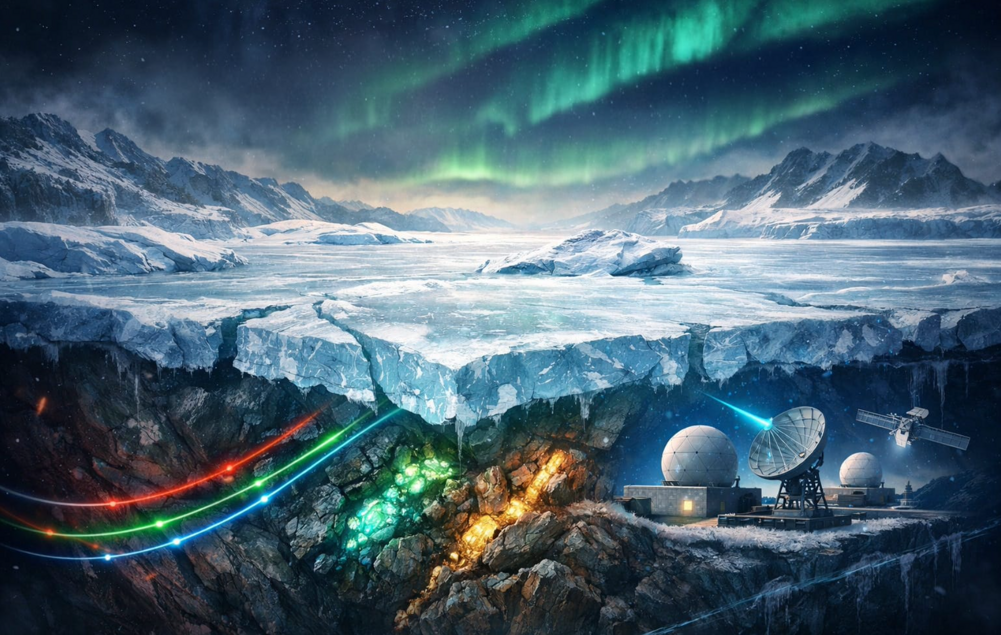
Da analista geopolitico, l’inizio del 2026 è stato come imbattersi in un nuovo El Dorado: una sequenza ininterrotta di eventi, controversie, segnali d’allarme. Per chi non opera quotidianamente nel campo della geopolitica, ciò che sta accadendo oggi - soprattutto in relazione alla Groenlandia - può sembrare una catastrofe. C’è chi arriva a pensare che queste tensioni possano condurre allo sfaldamento della NATO e, con essa, alla fine della sicurezza del mondo occidentale così come lo conosciamo.
Tuttavia, le relazioni internazionali sono piene di zone grigie, ed è proprio queste che, il più delle volte, finiscono per prevalere. Per orientarsi in tali aree è necessario innanzitutto comprendere cosa sia realmente in gioco - potere, influenza, tecnologia, risorse - e perché ciò sia rilevante per uno o più Stati. In secondo luogo, occorre individuare chi sono gli attori che si muovono in questo contesto e secondo quali modalità tendono ad agire. Infine, il quadro delle alleanze globali. Rispondere a queste domande contribuisce a comprendere meglio quali possano essere gli esiti di una determinata tensione. In questo senso, la Groenlandia rappresenta un caso particolarmente significativo.
Cosa sta succedendo in Groenlandia?
Già durante il suo primo mandato alla Casa Bianca, Donald Trump aveva definito la Groenlandia di interesse strategico per gli Stati Uniti, sia per la sua posizione geografica sia per le sue risorse naturali. La storia mostra che non è stato il primo a pensarla così: già nell’Ottocento Madison e Johnson manifestarono attenzione per l’isola, mentre nel corso del Novecento anche Taft, Roosevelt e Ford ne seguirono da vicino l’evoluzione. La Danimarca, tuttavia, ha sempre respinto ogni proposta, indipendentemente dalle pressioni o dalle garanzie di protezione offerte dagli Stati Uniti - come avvenne durante la Seconda guerra mondiale, quando Washington impedì alla Germania di stabilire basi sull’isola. L’unica concessione danese è stata l’accesso militare statunitense al territorio.
Tra il 2025 e l’inizio del 2026, Trump ha rilanciato il suo interesse per la Groenlandia, ricevendo però ancora una volta un rifiuto netto, sia dalla premier danese Mette Frederiksen sia dalla ministra degli Esteri groenlandese Ane Lone Bagger, che ha ribadito come l’isola sia aperta agli affari, ma non in vendita. Numerosi Paesi europei, alleati sia della Danimarca (attraverso l’UE) sia degli Stati Uniti (tramite la NATO), si sono schierati a sostegno di Copenaghen, sottolineando che la Groenlandia rientra nella sovranità danese e respingendo qualsiasi minaccia militare proveniente dalla Casa Bianca. In questo contesto, Francia, Germania, Svezia, Norvegia, Finlandia, Paesi Bassi e Regno Unito hanno inviato contingenti in Groenlandia, una presenza dal valore soprattutto simbolico, data l’esiguità delle truppe dispiegate sull’isola artica. Inoltre, il dispiegamento europeo in ambito NATO rientra nella cosiddetta “Operation Arctic Endurance”, un’esercitazione guidata dalla Danimarca (non formalmente confermata dalla NATO) volta a rafforzare le capacità degli Alleati nell’Artico. Nel frattempo, Copenaghen e Nuuk hanno chiesto al Segretario Generale NATO, Rutte, di istituire una missione in Groenlandia.
Alla data del 22 gennaio, il presidente Trump ha dichiarato su Truth - dopo il suo intervento al World Economic Forum e l’incontro con Rutte - di aver definito una “base per un futuro accordo”. I dettagli non sono ancora stati resi noti.
Le dinamiche della sicurezza artica
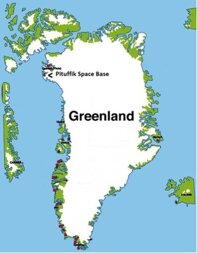
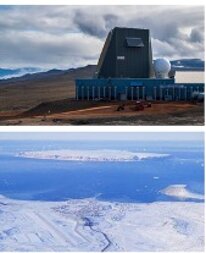
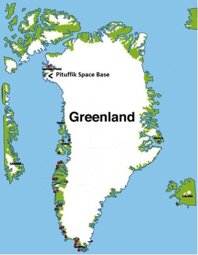
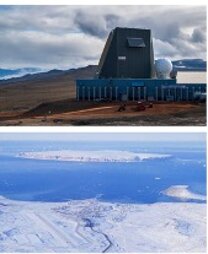
Situata lungo il varco Groenlandia–Islanda–Regno Unito (GIUK gap), la Groenlandia occupa una posizione ideale per monitorare i movimenti navali sovietici/russi (e potenzialmente cinesi) verso l’Atlantico - uno dei principali motivi di preoccupazione di Trump. Inoltre, in seguito all’accordo di difesa firmato tra Stati Uniti e Danimarca nel 1951, Washington ha istituito nel nord-ovest della Groenlandia una base militare di primaria importanza: la Pituffik Space Base (ex Thule Base). [1]
Questa installazione è cruciale per la sicurezza degli Stati Uniti, poiché ospita un sistema di allerta preventivo per missili balistici (Ballistic Missile Early Warning System) e potenti radar in grado di tracciare missili e oggetti nello spazio. A ciò si aggiunge l’attività di ricerca avanzata sull’Artico e sullo spazio condotta dall’821° Space Base Group e dal relativo Squadrone di Supporto. Analisi della NATO indicano inoltre che i sistemi installati a Pituffik sono in grado di tracciare missili balistici intercontinentali (ICBM), un elemento particolarmente rilevante alla luce delle preoccupazioni di Trump nei confronti di Russia e Cina, entrambe dotate di questo tipo di armamenti.
Negli ultimi anni, sia Mosca sia Pechino hanno intensificato in modo significativo la propria presenza nell’Artico. La Russia ha ampliato e modernizzato con continuità la sua presenza militare nella regione attraverso nuove basi, installazioni radar e il rafforzamento della Flotta del Nord, che oggi concentra decine di sottomarini e sistemi missilistici nella penisola di Kola[2]. Non sorprende, quindi, che la Rotta del Mare del Nord (Northern Sea Route, NSR) rappresenti una priorità strategica per la sicurezza nazionale russa. Per quanto riguarda la Cina, Pechino si definisce uno “Stato quasi-artico”[3] e, pur non mostrando interessi militari diretti, opera per garantire la sicurezza logistica e delle risorse nella regione. L’Artico è infatti centrale nella “Via della Seta Polare” cinese, progetto nell’ambito del quale il governo sta costruendo stazioni di ricerca artiche, sviluppando nuovi rompighiaccio e puntando alla realizzazione di cavi in fibra ottica e collegamenti satellitari.
Sebbene sul piano della sicurezza si potrebbero formulare molte altre considerazioni, la rilevanza strategica della Groenlandia va ben oltre la sola dimensione militare.
La geoeconomia della Groenlandia
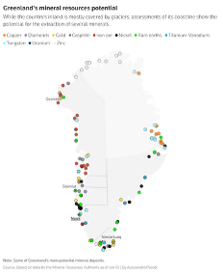
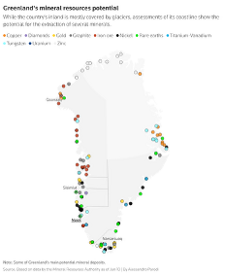
Sotto la sua superficie, la Groenlandia ospita 25 dei 34 materiali che l’Unione Europea definisce “critici”[4]. Tra questi figurano, ad esempio, ferro, grafite e rame. Inoltre, al di sotto della calotta glaciale si trovano ingenti quantità di terre rare - fondamentali per la produzione di veicoli elettrici e tecnologie militari - oltre a significative riserve di uranio. Il giacimento di Kuannersuit (Kvanefjeld), per esempio, conterrebbe circa 1,5 milioni di tonnellate di ossidi di terre rare e una stima di 270.000 tonnellate di uranio, rendendolo uno dei più grandi depositi al mondo[5].
Questi dati assumono un rilievo particolare se si considera come l’Unione Europea e altri Paesi stiano cercando con urgenza di ridurre la propria dipendenza dalla Cina. In questo senso, la Groenlandia rappresenterebbe un’opportunità ideale; tuttavia, i leader europei non hanno compiuto passi concreti per valorizzarne le risorse. Sfruttando questa inattività, Trump mira a trasformare tale vantaggio strategico in uno strumento per rafforzare la ricchezza degli Stati Uniti, accrescerne il peso globale e aumentarne l’autonomia in termini di risorse. Pur essendo discutibili le modalità con cui intende perseguire questo obiettivo, è difficile negare che, se l’Europa resta paralizzata da una burocrazia inefficace e da regolamentazioni sterili, altri attori finiscano per cogliere l’occasione di liberare il potenziale ancora inesplorato della Groenlandia.
Nonostante l’enorme disponibilità di risorse, la Groenlandia presenta numerosi ostacoli. Le condizioni climatiche estreme e la presenza costante del ghiaccio rendono complesse le operazioni di costruzione. A ciò si aggiunge la quasi totale assenza di strade verso i siti estrattivi e di infrastrutture dedicate. Altrettanto rilevanti sono le criticità ambientali e sociali: l’estrazione di petrolio e gas naturale è vietata per ragioni ambientali, mentre lo sviluppo minerario è stato spesso contestato dalle popolazioni indigene, in particolare per l’uso di sostanze chimiche potenzialmente dannose per la flora e la fauna locali.
Si tratta indubbiamente di preoccupazioni fondate e di sfide complesse, ma è legittimo ritenere che un Paese come gli Stati Uniti disponga delle risorse finanziarie, delle competenze e delle tecnologie necessarie per individuare soluzioni sostenibili nel lungo periodo. Un simile processo richiederebbe tempo e si realizzerebbe probabilmente sotto una nuova amministrazione; tuttavia, l’obiettivo di Trump è - a suo avviso legittimamente - quello di tracciare il percorso verso un futuro più solido per gli Stati Uniti.
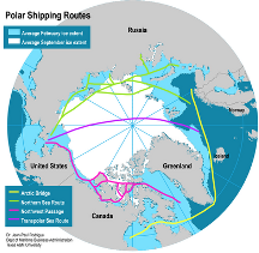
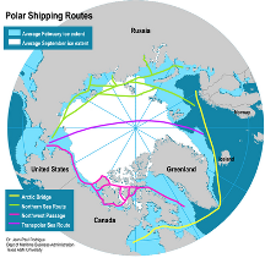
L’ultimo aspetto economico, ma non meno cruciale, riguarda la probabile apertura di nuove rotte commerciali attraverso il Passaggio a Nord-Ovest (Northwest Passage, NWP) e la Rotta Transpolare. Entrambe stanno diventando navigabili per periodi sempre più lunghi a causa dello scioglimento dei ghiacci, un fenomeno destinato ad accentuarsi. Come spesso accade, tuttavia, a una criticità corrisponde anche un’opportunità: la fusione dei ghiacci potrebbe infatti portare alla creazione di corridoi commerciali artici permanenti. Secondo alcuni studi, il risparmio in termini di tempo e carburante lungo queste rotte potrebbe arrivare fino al 40% rispetto al tragitto attraverso il Canale di Suez[6]. Resta comunque un’ipotesi ancora incerta, poiché non è chiaro quando tali condizioni si realizzeranno pienamente. In ogni caso, è altamente probabile che queste nuove rotte vadano a integrare, piuttosto che sostituire, quelle tradizionali.
Il potenziale digitale della Groenlandia
Prima di passare alle considerazioni finali, vi è un aspetto particolarmente interessante - e spesso sottovalutato - che merita attenzione: la digitalizzazione della Groenlandia. È noto come, sin dall’inizio del suo secondo mandato, Trump abbia posto con forza l’accento sull’importanza della tecnologia americana, difendendo le grandi aziende del settore e i loro imprenditori anche di fronte alle minacce di sanzioni europee, legate a presunte violazioni della privacy o a questioni fiscali. Considerata la centralità dei data center e della connettività internet, è possibile guardare alla Groenlandia come a un potenziale hub digitale artico. Gli argomenti a sostegno di questa visione sono molteplici: il clima estremamente freddo, che consente il raffreddamento naturale dei server, e l’ampia disponibilità di fonti rinnovabili per alimentarli. In questo senso, alcuni descrivono la Groenlandia come una vera e propria “terra promessa” per i data center, dove nuove tecnologie in numerosi settori (dall’intelligenza artificiale alla difesa, fino al cloud computing) potrebbero essere installate e ulteriormente sviluppate. Naturalmente, questo aspetto si lega direttamente alla questione delle risorse, poiché molti dei materiali critici presenti sotto la calotta groenlandese sono essenziali per lo sviluppo delle nuove tecnologie.
È inoltre importante sottolineare che attualmente la Groenlandia dispone soltanto di due cavi sottomarini: il Greenland Connect, che la collega a Canada e Islanda, e il Greenland Connect North, destinato a servire altre città dell’isola[7]. Ciò implica che, per rendere possibile l’insediamento di data center e di nuove industrie tecnologiche, sarebbe necessario realizzare più cavi paralleli e un’infrastruttura di peering locale, poiché un eventuale danneggiamento o disattivazione del Greenland Connect lascerebbe l’intera isola priva di connessione (a meno di un intervento diretto di Starlink). Ancora una volta, tuttavia, le difficoltà sono considerevoli: nonostante l’abbondanza di energie rinnovabili, la disponibilità effettiva di energia è limitata, poiché calibrata sulle esigenze di una popolazione ridotta e supportata da un’infrastruttura poco capillare. Inoltre, anche un investimento statunitense in data center e cavi sottomarini richiederebbe risorse finanziarie enormi e, soprattutto, tempi molto lunghi.
Considerazioni finali
La Groenlandia presenta un potenziale senza precedenti, che Trump ha compreso con chiarezza e che intende valorizzare anticipando Russia e Cina nello sfruttamento di tali opportunità. Egli sembra disposto a farlo attraverso modalità che, paradossalmente, rischierebbero di avvicinarlo a ciò che afferma di voler contrastare, ossia la guerra di Putin all’Ucraina. Così come Mosca ha violato la sovranità ucraina, un’invasione americana della Groenlandia comporterebbe una violazione della sovranità danese. Tuttavia, come suggeriscono altri casi recenti (l’ultima crisi iraniana ne è un esempio) le minacce di Trump tendono a rimanere sul piano della retorica politica, permettendogli di ottenere i suoi obiettivi senza ricorrere all’uso della forza. La logica alla base di questa valutazione è semplice: un attacco o un’invasione della Groenlandia segnerebbe con ogni probabilità la fine della NATO. Pur mantenendo un atteggiamento scettico nei confronti dell’Alleanza, Trump è ben consapevole del ruolo che essa svolge nella sicurezza complessiva dell’Occidente e del fatto che il suo smantellamento potrebbe innescare una serie di eventi senza precedenti.
Con ogni probabilità, l’accordo che verrà siglato secondo le dichiarazioni di Trump (con un coinvolgimento diretto della NATO) prevederà concessioni militari a favore degli Stati Uniti, nonché possibili garanzie dell’Alleanza per una missione artica permanente, che rafforzerebbe ulteriormente la sicurezza della regione. Sul fronte delle risorse, è possibile che non venga discusso alcun accordo specifico oppure che vengano concesse alla Casa Bianca forme di sfruttamento parziale, verosimilmente in cambio di investimenti infrastrutturali da parte di aziende statunitensi. Sebbene alcuni possano interpretare questo scenario come negativo per l’Europa, è innegabile che l’Unione Europea continui a restare indietro e non riesca a tenere il passo con la velocità dei cambiamenti globali. Per questo motivo, sarebbe decisamente preferibile per l’Occidente che gli Stati Uniti valorizzassero il potenziale artico e, soprattutto, rafforzassero la sicurezza regionale. In tale contesto, l’UE dovrebbe diventare un partner ancora più solido degli Stati Uniti, così da poterne trarre benefici a sua volta. Ostacolare il coinvolgimento americano significherebbe sia lasciare inutilizzato il potenziale della Groenlandia, sia consentire a Cina o Russia di muoversi liberamente nell’Atlantico.
Beneath the Ice:
Greenland and the Hidden Architecture of Arctic Power
By Alessandro Tamburrini
As a geopolitical analyst, the way 2026 opened is akin to discovering El Dorado. So many events, so many controversies, so many warnings. To someone who does not work in the field of geopolitics daily, what is currently happening, especially related to Greenland, seems like a catastrophe. One may think that the tensions will lead NATO to disappear, as well as the security of the Western world as we know it today.
Yet, international relations are full of grey areas, which are most of the time those that prevail. To navigate these zones, one must first understand: first, what’s at stake - may it be power, influence, tech, resources… - and why it matters for a certain state (or more). Then, who are the leaders moving in this chaos, and how do they usually operate. Lastly, the global alliances. Answering these questions surely contributes to a better understanding of what the result of a certain tension can be. I do believe Greenland is an interesting case in point.
What is happening in Greenland?
Already during his first mandate at the White House, Donald Trump defined Greenland as strategically interesting for the United States, given its location and natural resources. History tells us he was not the first one: as a matter of fact, in the 1800s Madison and Johnson showed their interest in Greenland, and later, during the 20th century, Taft, FDR, and Ford also monitored the big Arctic island. However, Denmark has always declined any offer, no matter the threats or the protection that the USA granted to the island when Washington denied the Germans the establishment of bases there during WWII. The only concession that Denmark made was allowing the US military access to the territory.
Between 2025 and the beginning of 2026, Trump revived his interest in Greenland, but once more received a swift rejection by the Danish PM Mette Frederiksen, as well as by Greenland’s foreign minister Ane Lone Bagger, who said that the island is open for business, but not for sale. Many European countries allied both with Denmark (via EU membership) and with the US (through NATO participation), side with Copenhagen, underlining that Greenland is part of Danish sovereignty. They also repel any military threat put forward by the White House. In this regard, France, Germany, Sweden, Norway, Finland, the Netherlands, and the UK deployed some contingents in Greenland, even though this deployment is purely symbolic given the extremely low number of soldiers sent to the Arctic island. Moreover, the European NATO deployment is part of the so-called “Operation Arctic Endurance”, a Danish-led (non-NATO confirmed) exercise to bolster the Allies’ capabilities in the Arctic. Also, Copenhagen and Nuuk have asked NATO Secretary General Rutte to establish a mission in Greenland.
As of January 22nd, President Trump has declared on Truth - after his intervention at the World Economic Forum and the meeting with Rutte - that he has formed a “framework of a future deal”. Details have yet to be disclosed.
Arctic Security Dynamics
Lying astride the Greenland–Iceland–UK (GIUK) gap, Greenland is ideally placed to monitor Soviet/Russian (and potentially Chinese) naval movements into the Atlantic - one of Trump’s most pressing concerns. In addition, after the defence agreement signed between the US and Denmark in 1951, Washington established in the Northwest of Greenland a military base which is of primary importance: the Pituffik Space Base (formerly Thule Base). [1]
This military installation is essential for the security of the United States as it is equipped with a Ballistic Missile Early Warning System and powerful radars that track missiles and objects in space. Not to forget the important research related to the Arctic and space conducted there by the 821st Space Base Group and its Support Squadron. NATO analyses also suggest that the systems installed in the Pituffik Base can track ICBMs, a relevant aspect given Trump’s concerns about Russia and China, both possessing these kinds of weapons.
Also, both Moscow and Beijing have dramatically stepped up their Arctic presence in recent years. Russia has consistently expanded and upgraded its Arctic military presence through new bases, radar installations, and the boost to the Northern Fleet, which now harbors dozens of submarines and missiles in the Kola Peninsula[2]. As a consequence, it is not surprising that the Northern Sea Route (NSR) is a Russian national security priority. As for the Chinese, Beijing claims “near-Arctic state” status[3] and, while not having apparent military interests, operates to guarantee the logistic and resources security of the Arctic. The region is, in fact, pivotal in China’s “Polar Silk Road”, for which the government is building Arctic research stations, producing new icebreakers, and seeking fiber-optic cables and satellite links.
While many more considerations could be made in terms of security, there is much more behind the strategic relevance of Greenland.
Greenland’s Geoeconomics
Greenland hosts beneath its surface 25 of the 34 materials that are defined as “critical” by the European Union[4]. Some of these include iron ore, graphite, and copper. Moreover, beneath the ice, there are plenty of rare earth elements key to the production of electric vehicles and military technologies, and of uranium. For example, the Kuannersuit (Kvanefjeld) deposit contains ~1.5 million tons of rare-earth oxides and an estimated 270,000 tons of uranium, thus making it one of the largest deposits worldwide[5].
These numbers are particularly relevant, especially considering that the EU and other countries are desperately trying to reduce their dependence on China. Greenland figures as the perfect opportunity to do that; nonetheless, European leaders have made no progress in trying to exploit the richness of Greenland. Leveraging this inactivity, Trump wants to use this strategic opportunity to make the US richer, greater, and more resource-independent. While the means with which he wants to achieve this are debatable, it is more than fair to say that if European bureaucrats are blind and just work on useless regulations, someone else has to take the chance of unleashing Greenland’s untapped potential.
Notwithstanding the vast amount of resources, Greenland is full of hurdles. The extreme weather and the year-round ice complicate construction. In addition, few (or not at all) roads lead to the extraction sites, as well as almost no extraction infrastructure. Equally problematic are the environmental and social issues. As a matter of fact, extracting oil and natural gas is banned in Greenland for environmental reasons; whereas the development of mining has been opposed by indigenous people, given the requirement of chemicals that may contaminate the local flora and fauna.
It is undeniable that these are important concerns and challenges, but I personally believe that a country like the US would have the money, the expertise, and the technology to find a sustainable solution in the long run. Naturally, this would require time and would certainly happen under a new administration, yet Trump wants - rightly - to pave the path for a bright American future.
The last economic aspect, but certainly critical, is the likely natural creation of new trade routes through the Northwest Passage (NWP) and Transpolar Route. These two are becoming navigable for longer periods due to the ice melting, a phenomenon that is destined to worsen. However, every cloud has a silver lining: the ice melting will, indeed, create new permanent commercial routes in the Arctic. Studies show that the savings in terms of time and fuel through the Arctic would be up to 40% compared to the Suez Canal route[6]. Nevertheless, this is all speculation since there is no clear idea about when all of this is gonna occur. In any case, these routes would almost certainly only complement the traditional ones, not substitute them.
Greenland’s Digital Potential
Before moving to the final thoughts, there is a quite intriguing aspect to analyze, which is often too underrated: the digitalization of Greenland. We all know that since the start of his second mandate, Trump has strongly highlighted the importance of American technology, defending big tech companies and their entrepreneurs also against threats of European sanctions (for alleged violations of privacy rights and fiscal matters). Granted the importance of data centers and of the internet connection, I believe that one may also see Greenland as a potential Arctic data hub. The arguments in favor of this view are: the very cold climate, which enables free cooling of servers, and the abundant presence of renewables to power them. In this regard, some describe Greenland as a “data center dreamland” where new technologies in a wide array of sectors (from AI to defence to cloud computing) could be installed and developed even more. Obviously, this connects with the point about resources, as many of the critical materials under Greenland’s ice are key to developing new tech.
Moreover, it is important to note that currently Greenland only harbors two submarine cables: Greenland Connect, linked to Canada and Iceland, and Greenland Connect North to serve other cities of the island[7]. This means that to potentially establish data centers and new tech industries, multiple parallel cables and local peering infrastructure should be built, given that if Greenland Connect were to be cut or disabled, the entire island would be without connection (unless Musk decides to provide the island with Starlink). However, once more, hurdles are huge: despite the abundance of renewables, power availability is actually limited as it is tailored to the needs of a small population, so infrastructure is not diffused. Additionally, even a US investment in terms of data centers and undersea cables would require an incredible amount of money, but above all, time.
Final Considerations
Greenland has an unprecedented potential, as Trump has well understood and urges to anticipate Russia and China in exploiting this potential. He seems willing to untap that potential through means that wouldn’t differentiate him from what he is trying to stop, that is Putin’s war in Ukraine. In fact, as Russia breached Ukraine’s sovereignty, so would the US breach Denmark’s sovereignty by invading Greenland. However, what other case studies suggest (the crisis in Iran as latest example), Trump’s threats are only going to be political rhetoric; thus, he will achieve what he truly wants without using force. The reason behind this logic is that he would never attack and invade Greenland since he knows really well that the scenario unfolding from that event would be the end of NATO. Despite his skepticism towards the Alliance, he well comprehends that it contributes to the overall Western security and that dismantling it could likely be followed by a series of unprecedented events.
Most certainly, the deal that will be sealed as per Trump declarations (with NATO directly involved) will foresee military concessions to the US as well as possibly NATO guarantees for an Arctic permanent mission which would further bolster the security of the region. About the resources, either no agreement will be discussed or again some concessions will be made to the White House for a partial exploitation, possibly in return for infrastructure investment by American companies. Despite some may see this as negative for Europeans, it is undeniable to admit that the European Union still lags behind and is not able to keep up with the pace of how the world evolves. Therefore, it would be much better for the West if the US utilizes the Arctic potential and above all enhances regional security. If this happens, the EU should become an even stronger US partner, so that it will also have gains. Not favoring the US involvement would mean both leaving Greenland’s potential beneath the ice and allowing China or Russia to wander in the Atlantic as an active threat.
Bibliografia
[1] Credit: Peterson & Schriever Space Force Base & North Atlantic Division of the U.S. Army Corps of Engineers.
[2] Anna J. Davis, Russia Prepares to Add Newest Nuclear-Powered Submarine to the Northern Fleet, Jamestown, May 30th, 2025, https://bit.ly/4jM93lz.
[3] State Council of the People’s Republic of China, China’s Arctic Policy, January 26th, 2018, https://bit.ly/4jP93kL.
[4] Reuters, Greenland's rich but largely untapped mineral resources, January 14th, https://bit.ly/4a3iFoP.
[5] Ties Dams, Louise van Schaik, and Adája Stoetman, Presence before power China’s Arctic strategy in Iceland and Greenland, June 2020.
[6] Malte Humpert and Andreas Raspotnik, The Future of Arctic Shipping, October 11th, 2012, https://www.thearcticinstitute.org/future-arctic-shipping/.
[7] Submarine Cable Map, https://www.submarinecablemap.com/.

Alessandro Tamburrini
Vicepresidente di NSSI e co-fondatore del NSSI Youth Hub, Alessandro è un appassionato di sicurezza internazionale, con focus su NATO, difesa e affari militari. Alumnus LUISS e ULB per il Double Degree in International Relations, con una tesi sul terrorismo nel Corno d’Africa, è attualmente Project Advisor presso il NATO Stability Policing Centre of Excellence. Inoltre è Policy Analyst & Advisor per Youth Security Europe (YSE) e collabora con il CoESPU Magazine e la Rassegna dell’Arma dei Carabinieri.
In passato è stato Blue Book Trainee al Comitato Europeo delle Regioni ed Executive Assistant presso Easy Diplomacy. Ha anche acquisito competenze in COCIM e CIMIC tramite il corso di alta formazione sulla cooperazione civile-militare del Centro Alti Studi Difesa e frequenta l’Executive Master in Leadership della Fondazione Italia USA.